
























How to build a sleep routine that actually works…….You ever notice how sleep advice online sounds like it’s written by a robot who’s never been tired in their life? “Just go to bed earlier.” Oh really, Susan? Thanks, never thought of that.
I’ve lived in Queens my whole life, and if there’s one thing New York does not give you, it’s quiet nights. Sirens, buses, the guy who walks his dog at 1 a.m. like it’s his personal catwalk—it’s a lot. For years, my “sleep routine” was basically passing out on the couch mid-Netflix episode, then waking up at 3 a.m. to shuffle to bed like a zombie. (Classy, I know.)
But last winter, after my third cup of coffee at 10 p.m. (don’t judge), I hit a wall. I was cranky, exhausted, and—this was the kicker—my under-eye bags had under-eye bags. I finally decided: okay, enough. I need to actually figure out how to build a sleep routine that actually works. And not one of those Pinterest-perfect routines where you drink chamomile tea under moonlight while journaling about your chakras. Like, a real, messy-but-effective routine for a normal, kinda chaotic human.
Here’s what happened.
Step One: Accept That You’re Not a Sleep Saint
I used to beat myself up for not being a “sleep person.” You know those people who wake up at 6 a.m. to meditate and journal before sunrise? Yeah, that’s not me. I’m more of a “hit snooze, scroll Instagram, regret my life choices” type.
What changed everything? Dropping the guilt. Seriously. I stopped thinking I had to be perfect and started small. Like—tiny.
One week, all I did was make myself brush my teeth and then get into bed (instead of brushing teeth, then scrolling TikTok, then suddenly making pasta at 1 a.m.—don’t ask). The next week, I added a no-caffeine-after-4-p.m. rule.
It wasn’t magic overnight, but it was manageable. And weirdly, that’s what makes a sleep routine stick.

Step Two: Do the Weird Stuff That Actually Works
I’ve tried the “typical” stuff—lavender sprays, meditation apps, counting sheep (I gave up at 37). Some helped a little, but the real game-changers were unexpected:
- Lighting games. I bought this $20 dimmable lamp from Target and started turning it low an hour before bed. My brain, which apparently thinks it’s a Times Square billboard, finally got the memo: “Oh, it’s night now!”
- Sound swaps. Instead of doom-scrolling Twitter, I put on a podcast about…snail facts. (No joke. Snails are surprisingly soothing.)
- My “wind-down” cue. Every night I do the same thing—wash my face, put on my softest hoodie, make a cup of decaf tea—and it’s like flipping a sleepy switch.
It’s not perfect. Sometimes I still end up watching four episodes of The Office because “just one more” is a lie we tell ourselves. But these tiny rituals helped signal my brain that it’s bedtime.
Step Three: Make Your Bedroom a Sleep Cave (But Like…Cute)
Here’s my bold opinion: your bedroom is lying to you. You think it’s a “relaxing” space, but there’s probably a pile of laundry judging you in the corner and a laptop still open on work emails. (Mine did. For years.)
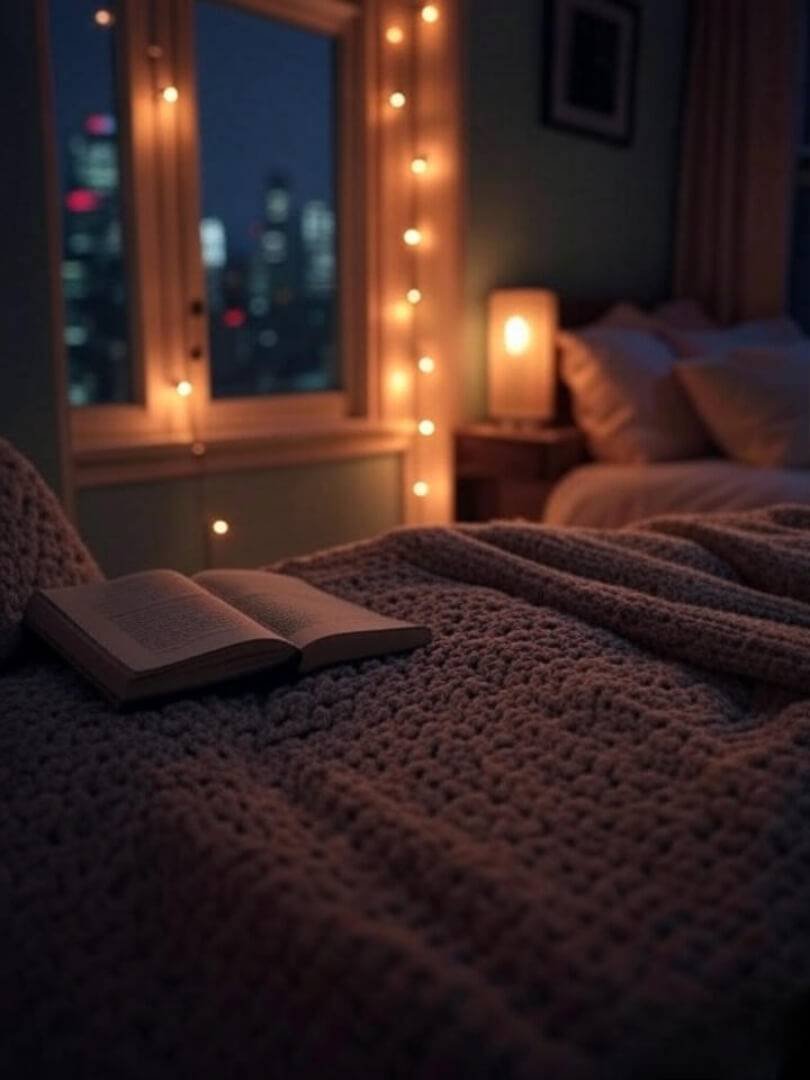
I turned mine into a sleep cave. Not like, bat cave dark—just cozy and sleep-friendly:
- Moved my phone charger across the room so I’d stop doom-scrolling in bed.
- Got blackout curtains because Queens streetlights are bright enough to tan by.
- Washed my sheets more often (fresh sheets = instant fancy hotel vibes).
Small changes, but man, the vibe shift was real. It felt like my room went from “chaotic crash pad” to “peaceful-ish retreat.”
Step Four: Listen to Your Body, Not the Internet
This one’s tricky. We’re flooded with sleep tips: no screens, no sugar, no fun after 8 p.m. But here’s the thing: everyone’s rhythm is different.
I’m a night owl. Always have been. Trying to force myself into a 9 p.m. bedtime was like trying to wear shoes two sizes too small—painful and pointless. So instead of fighting it, I worked with it. I aim for midnight now, not 10 p.m., and focus on consistency more than the clock.
Also, naps. People act like naps are evil. If a 20-minute nap keeps you from becoming a cranky gremlin at 5 p.m., go for it.
Step Five: Expect Slip-Ups (They’re Part of the Deal)
Real talk: even after months of my “perfect” routine, I still have nights where I’m up till 3 a.m. deep in a Reddit rabbit hole about how bread was invented. (Spoiler: it’s a weird story.)
But instead of spiraling, I just…start again the next night. No guilt, no self-dragging. Because building a sleep routine isn’t about perfection. It’s about patterns. You’re training your brain like you’d train a puppy. Sometimes it chews the couch. That’s okay.
Some Quick, Real-Life Tips about how to build a sleep routine that actually works?
- Move your body during the day. Even just a walk around the block helps.
- Cut caffeine earlier than you think. (4 p.m. max, my friends.)
- Make your bed in the morning. It’s weirdly motivating.
- If you can’t sleep, get up. Don’t just lie there spiraling. Do something boring, then try again.
- Track your progress loosely. Like, scribble in a notebook. “Fell asleep at 12:30, felt good.”
The Weirdest but Most Important Part: Self-Compassion
I used to think a “real adult” had everything together—meal-prepped lunches, a skincare routine, and a flawless 10 p.m. bedtime. But honestly? Most of us are winging it.
If you’re reading this because you’re tired (literally), know that building a sleep routine isn’t about becoming some Instagram wellness guru. It’s about making your life slightly less chaotic so you can wake up not feeling like you’ve been run over by a bus.
When I stopped treating sleep like a chore and started treating it like self-care, things clicked. It’s not perfect, but it’s workable. And for me, that’s the win.
Outbound Link Suggestions:
- Funny but helpful sleep tips from a real person’s blog: https://thesleepadvisor.org/funny-sleep-tips
- Pop culture nod to “snail facts” podcast: https://99percentinvisible.org/episode/snail-facts/